
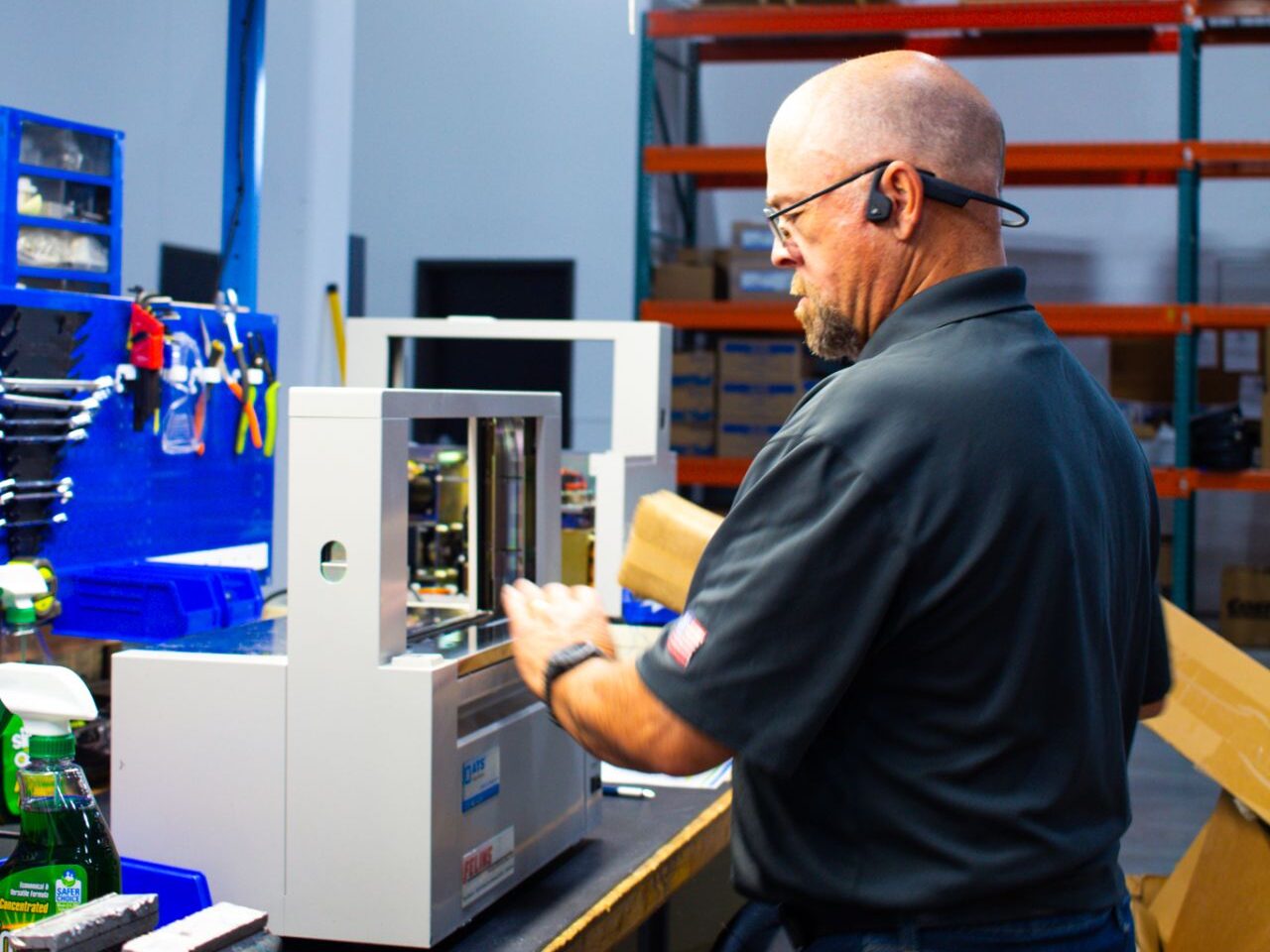
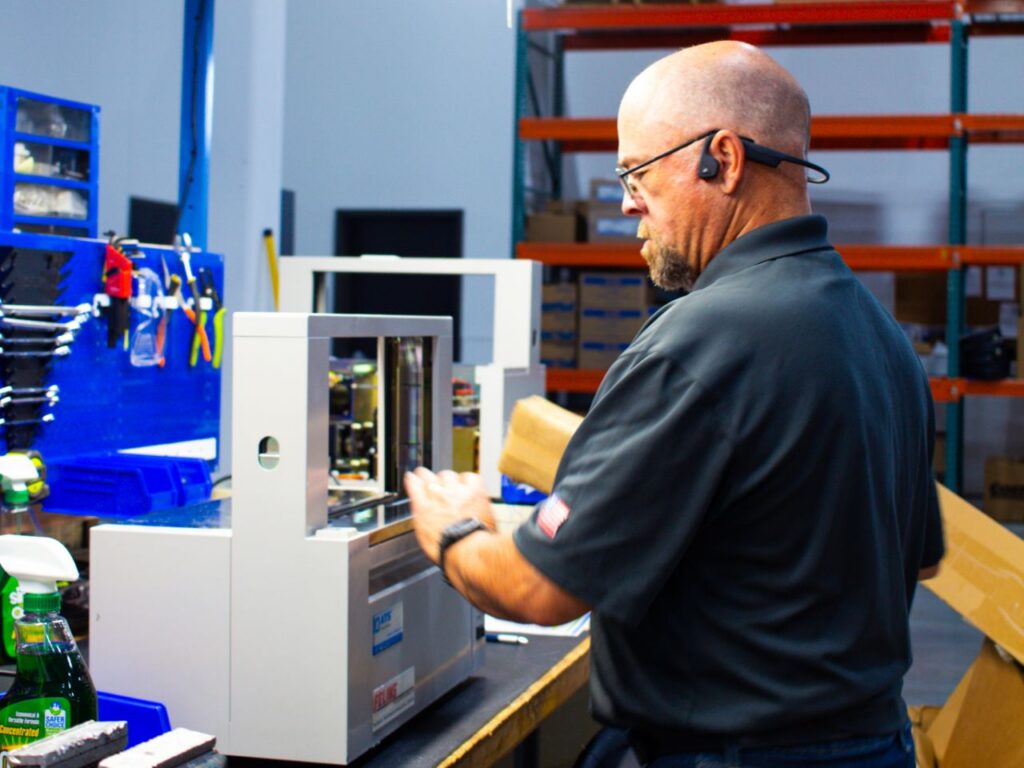
Manufacturers are being asked to produce more with the space they already have. At the same time, many packaging operations still depend on manual bundling, labeling, wrapping or product handling processes that limit throughput and consume valuable labor.
Adding automation may seem like the logical next step. Until the team looks at the production floor.
Existing lines may already be surrounded by conveyors, worktables, inspection equipment, utilities and operator walkways. Moving equipment can disrupt production, while expanding a building or installing an entirely new line may not be practical.
Fortunately, packaging automation does not always require a large footprint or a complete facility redesign.
Compact and modular equipment can allow manufacturers to automate a specific packaging step, integrate equipment into an existing line and expand the system as production requirements change.
This is becoming an increasingly important consideration. In a recent PMMI pharmaceutical manufacturing study, 42% of end users identified space constraints and footprint limitations as one of their leading manufacturing and packaging challenges. The same percentage identified expanding automation and reducing manual processes as a top challenge.
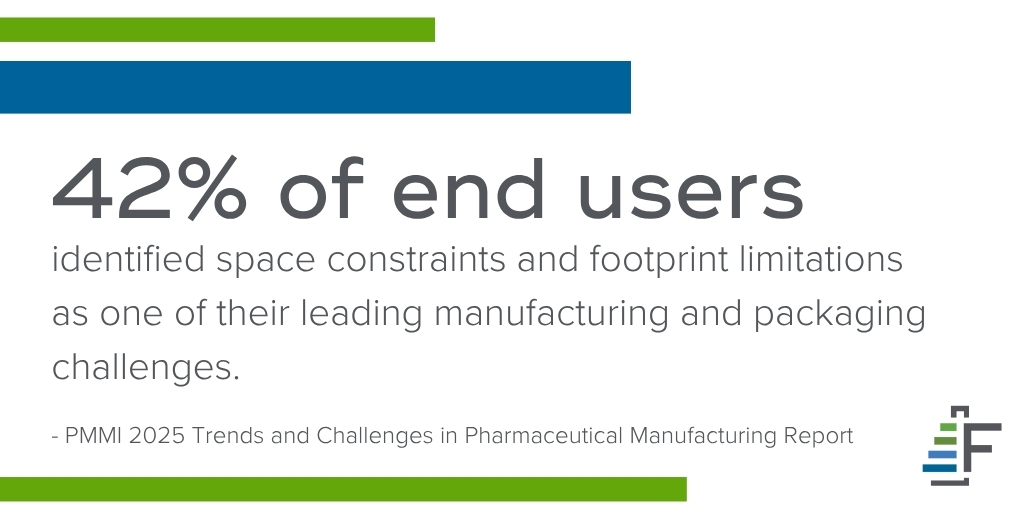
The challenge is clear: manufacturers need more automation, but they do not always have more room.
Start With the Process, Not the Machine
When floor space is limited, the equipment-selection process should begin with a clear understanding of the packaging task that needs improvement.
Rather than asking, “Where can we fit another machine?” begin with questions such as:
- Which process requires the most repetitive labor?
- Where are products waiting or accumulating?
- Which manual step limits the speed of the rest of the line?
- Where do packaging inconsistencies or rework occur?
- Does the process need to be fully automatic, or could an operator-assisted solution meet the goal?
- Could one piece of equipment perform more than one packaging function?
The goal is not simply to add automation. It is to identify the smallest, most practical change that creates a meaningful operational improvement.
For example, a manufacturer may not need to replace an entire packaging line to improve output. Automating one manual banding, tying, labeling or bundling process may remove a bottleneck while allowing the surrounding equipment to remain in place.
What Is Compact Packaging Automation?
Compact packaging automation refers to equipment designed to perform a specific packaging function while occupying less production space than a large, fully integrated system.
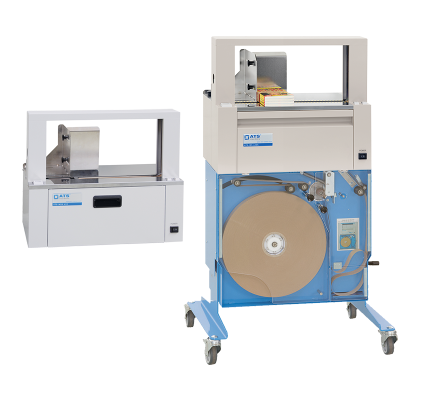
Depending on the application, compact equipment may include:
- Tabletop or operator-assisted machines
- Standalone automatic equipment
- Equipment installed directly beside an existing conveyor
- Systems positioned over or around an existing product path
- Compact machines that combine containment and labeling
- Equipment mounted on casters for repositioning
- Small automated cells that handle one defined process
Compact does not necessarily mean limited capability. The right system may still improve output, package consistency and labor utilization while fitting into a small section of an existing operation.
What Makes Packaging Equipment Modular?
Modular equipment is designed so that functions or components can be added, removed or reconfigured as production needs change.
A manufacturer might begin with a standalone machine operated manually. Later, that equipment could potentially be connected to conveyors, product-handling devices, printers or other automation.
A modular approach can allow a packaging project to develop in stages:
- Automate the immediate manual process.
- Add product feeding or conveying.
- Integrate printing, labeling or inspection.
- Connect the system to upstream or downstream equipment.
- Expand the level of automation as volume increases.
This staged approach may be especially useful for manufacturers managing uncertain demand, growing product lines or limited capital budgets.
The PMMI Processing State of the Industry report notes that many manufacturers are looking to maximize existing capacity and invest in more nimble automation rather than make large investments in new facilities.
Five Ways to Add Automation to an Existing Packaging Operation
1. Automate one bottleneck at a time
A complete line replacement may not be necessary.
Look for the process where operators spend the most time manually applying bands, labels, ties, sleeves or wrapping materials. Automating that single step may create additional capacity throughout the line.
This also allows the organization to evaluate the results before pursuing a larger automation project.
2. Consider operator-assisted equipment
Not every application requires fully automatic product feeding and handling.
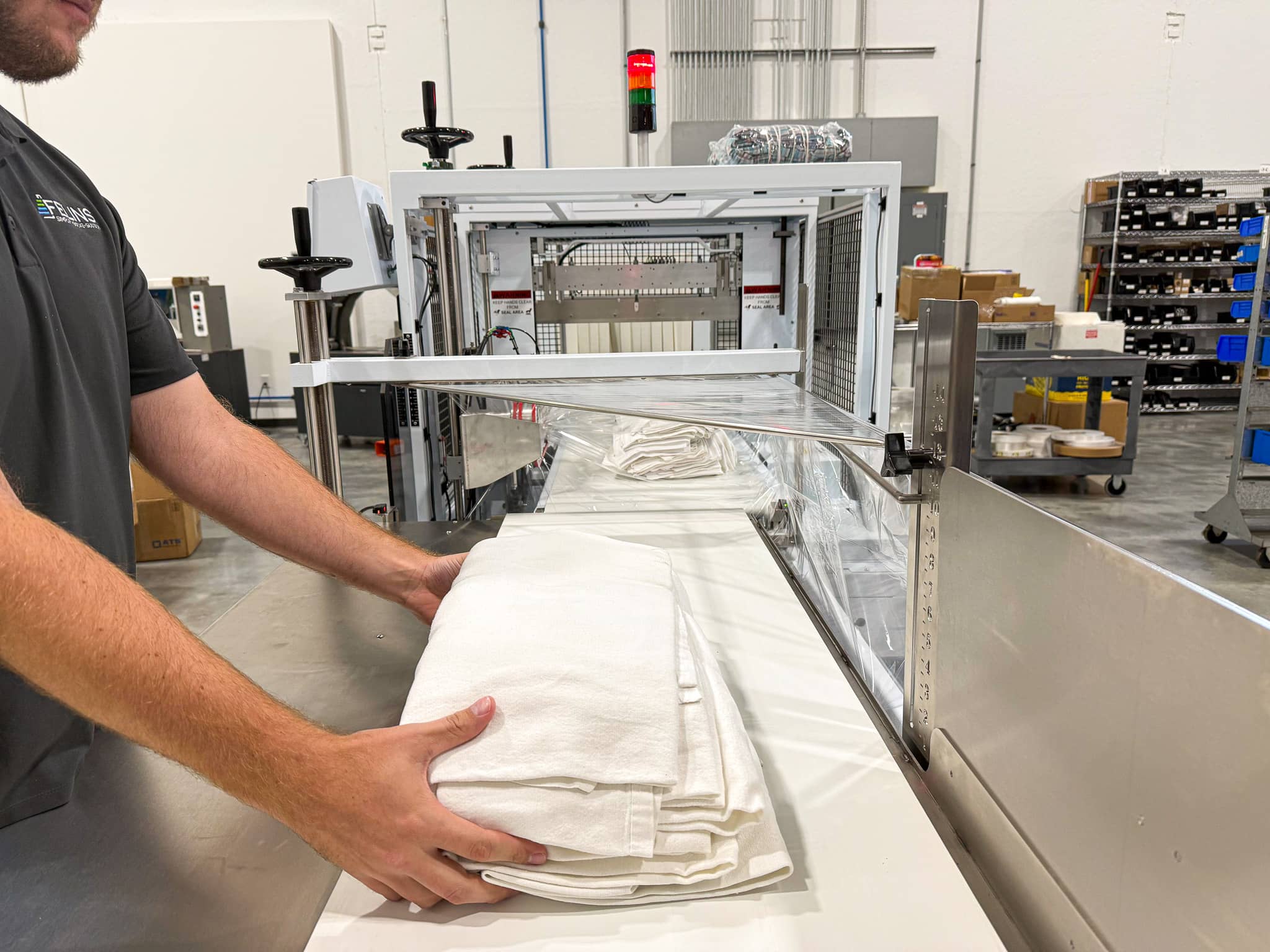
A semi-automatic or operator-assisted machine can automate the repetitive portion of a packaging process while allowing employees to continue loading, positioning or removing products.
This can provide a practical middle ground between a fully manual process and a larger integrated system.
Operator-assisted equipment may be especially appropriate when:
- Production volumes vary
- Products change frequently
- Operators already perform another nearby task
- The application requires manual inspection
- The available footprint is extremely limited
3. Use the existing conveyor wherever possible
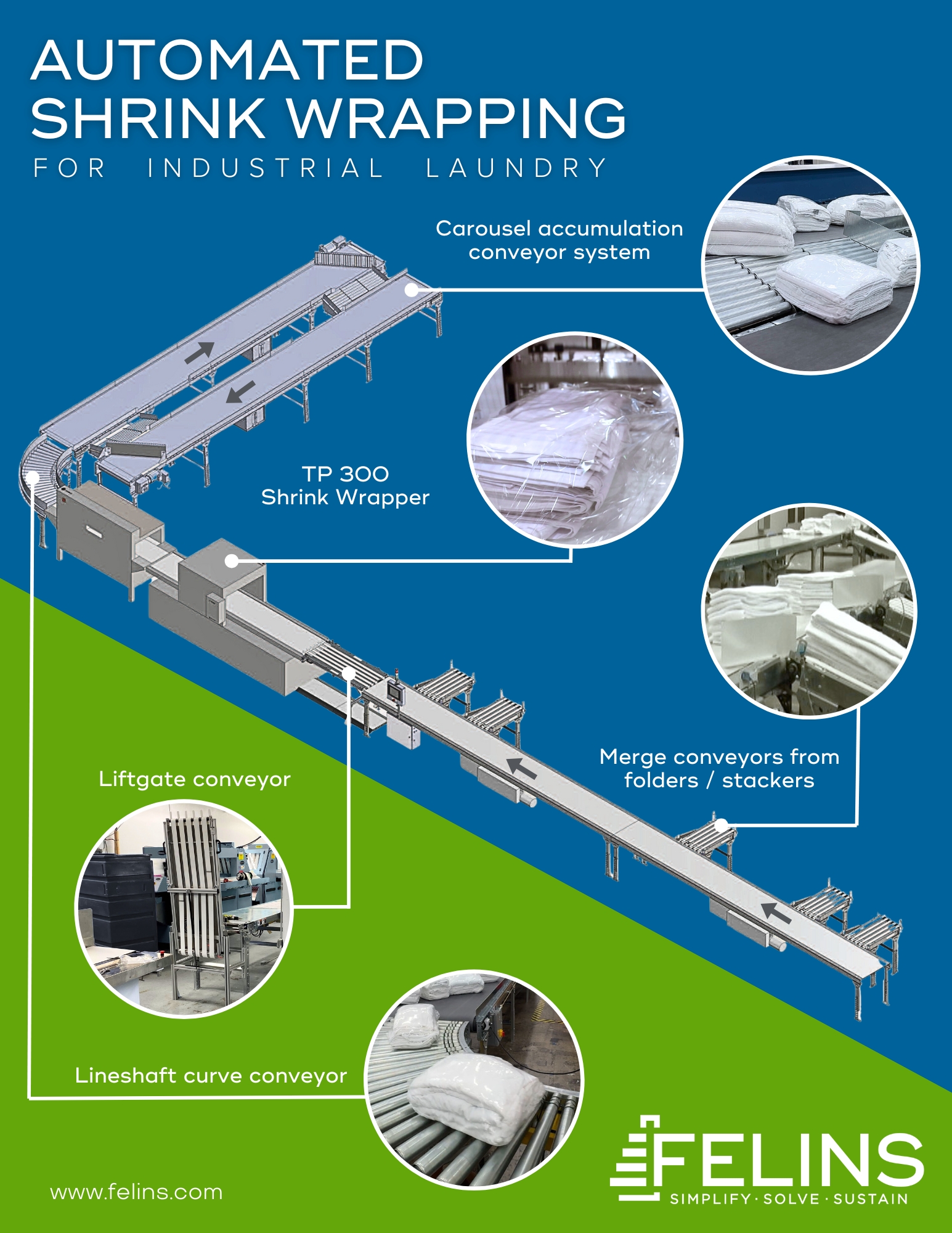
New packaging equipment may be able to work with part of the existing conveyor system instead of requiring a new product path.
Before selecting equipment, document:
- Conveyor width and height
- Product direction
- Available line length
- Existing controls
- Product spacing
- Line speed
- Nearby utilities
- Operator access requirements
A packaging equipment provider can use this information to determine whether a machine can be placed over, beside or directly within the existing line.
4. Look for opportunities to combine functions
Floor space becomes more valuable when one process can accomplish multiple goals.
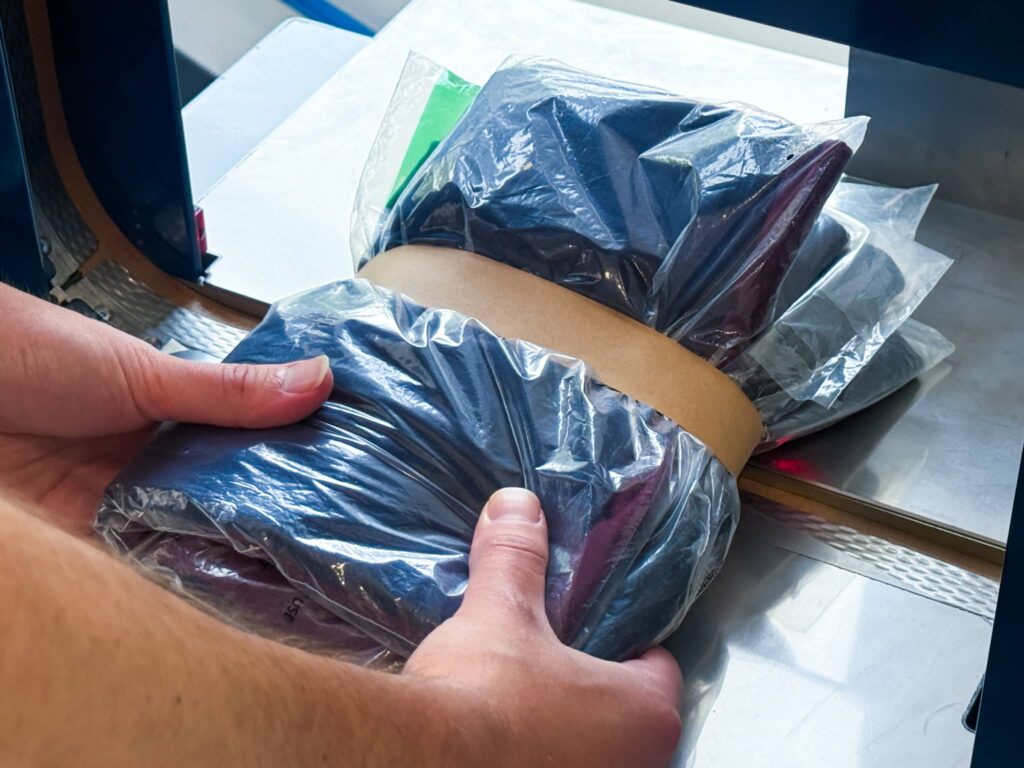
For example, a printed band may secure products together while also carrying branding, product information, instructions or a scannable code. Depending on the application, this may reduce the need for a separate label, sleeve or secondary packaging step.
Another popular solution for many products is Felins automation that can count, stack, and label products in one process.
Combining containment and communication may reduce:
- The number of machines needed
- Product transfers between processes
- Packaging consumables
- Operator handling
- Overall line length
The right solution depends on the product, package requirements and production environment, but multifunctional packaging approaches should be part of the evaluation.
5. Plan for future integration
Even when the first phase is small, consider what the packaging process may need in the future.
Ask whether the equipment can accommodate:
✅ Additional product sizes
✅ New bundle configurations
✅ Faster production rates
✅ Printer integration
✅ Automatic product feeding
✅ Conveyor connections
✅ Data or control-system integration
✅ Upstream and downstream automation
Planning for future requirements can help prevent the compact solution selected today from becoming another limitation later.
Floor Space Is More Than Machine Dimensions
It is easy to evaluate equipment based only on its published width and length. However, the machine footprint is only one part of the space requirement.
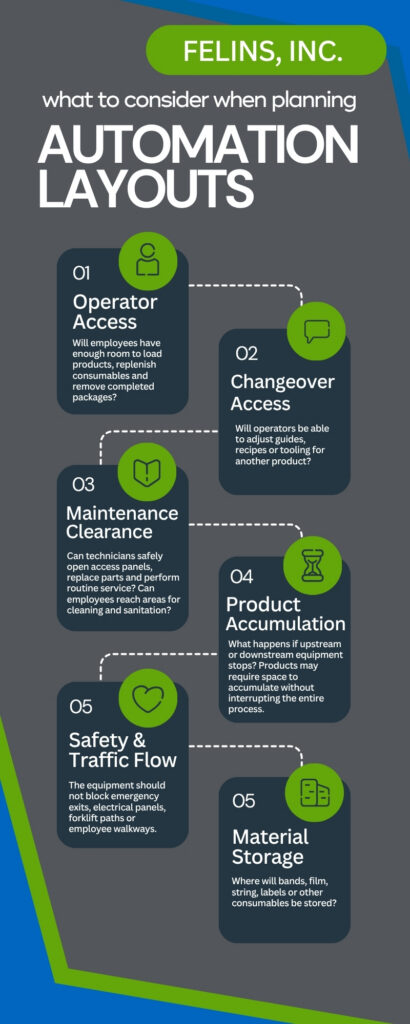
A realistic layout should also consider:
What to Share Before Evaluating a Compact Packaging System
A strong application review helps the equipment supplier understand both the packaging process and the available space.
Before the discussion, gather:
- Product photos or video
- Product and package dimensions
- Current packaging method
- Desired production rate
- Bundle size or configuration
- Available floor space
- Conveyor dimensions and speed
- Power and utility requirements
- Expected product changes
- Cleaning or environmental needs
A short video of the current process is especially helpful because it shows your floor plan as it is today with product flow, operator handling and more.
The Best Compact Solution Depends on the Application
Compact packaging equipment is not one-size-fits-all.
One operation may need a small operator-assisted machine. Another may require automatic equipment integrated into an existing conveyor. A more complex application may need product handling, printing and banding in one compact cell.
Application testing and layout review help determine the best fit. The smallest machine is not always the most effective compact packaging solution.
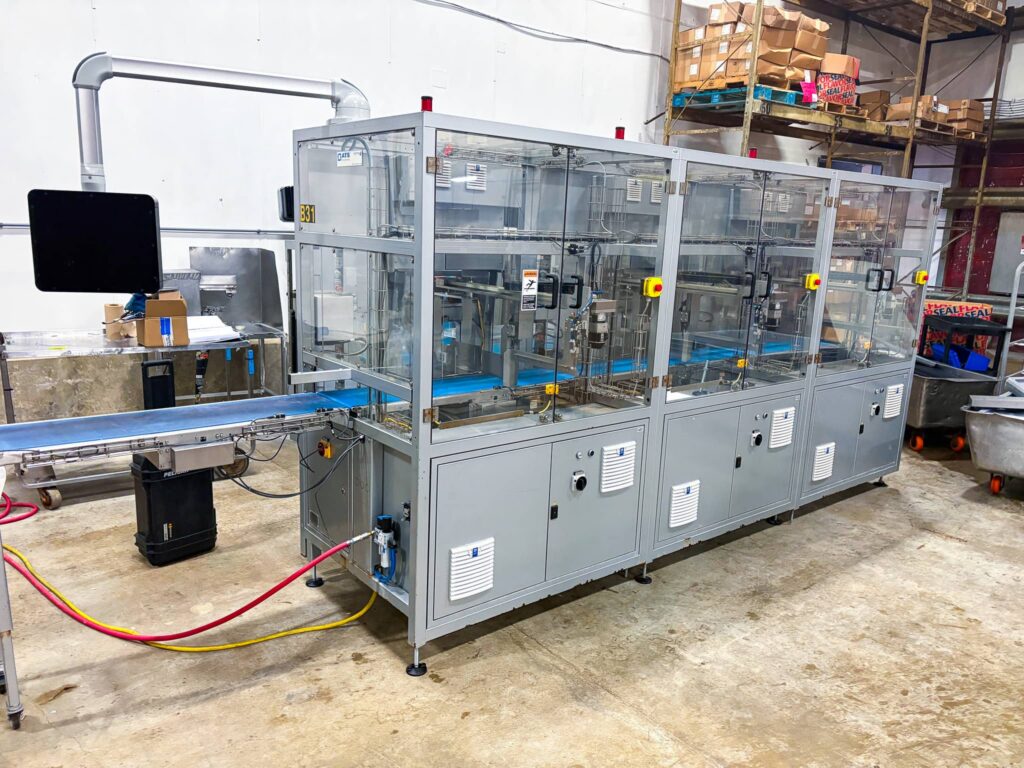
Make Existing Floor Space Work Harder
Limited floor space does not have to prevent packaging automation.
By targeting one bottleneck, using existing conveyors and choosing compact or modular equipment, manufacturers can improve throughput and reduce repetitive labor without rebuilding the entire packaging line.
The best projects begin with a clear review of the current process, packaging goals and physical space available.