The Best Way to Keep Products Clean and Protected
The best way to keep products clean, shrink wrapping showcases products without exposing them to dirt and debris. An alternative to bagging and hand wrapping, shrink wrapping systems also help eliminate bottlenecks and reduce labor costs.
Felins Full-Service Shrink Wrapping Solutions
for the Industrial Laundry Industry
If you’re running an industrial laundry operation, you need more than just a vendor; you need a partner that understands your business.
That’s why we’ve spent years engineering shrink wrapping systems specifically for laundries.
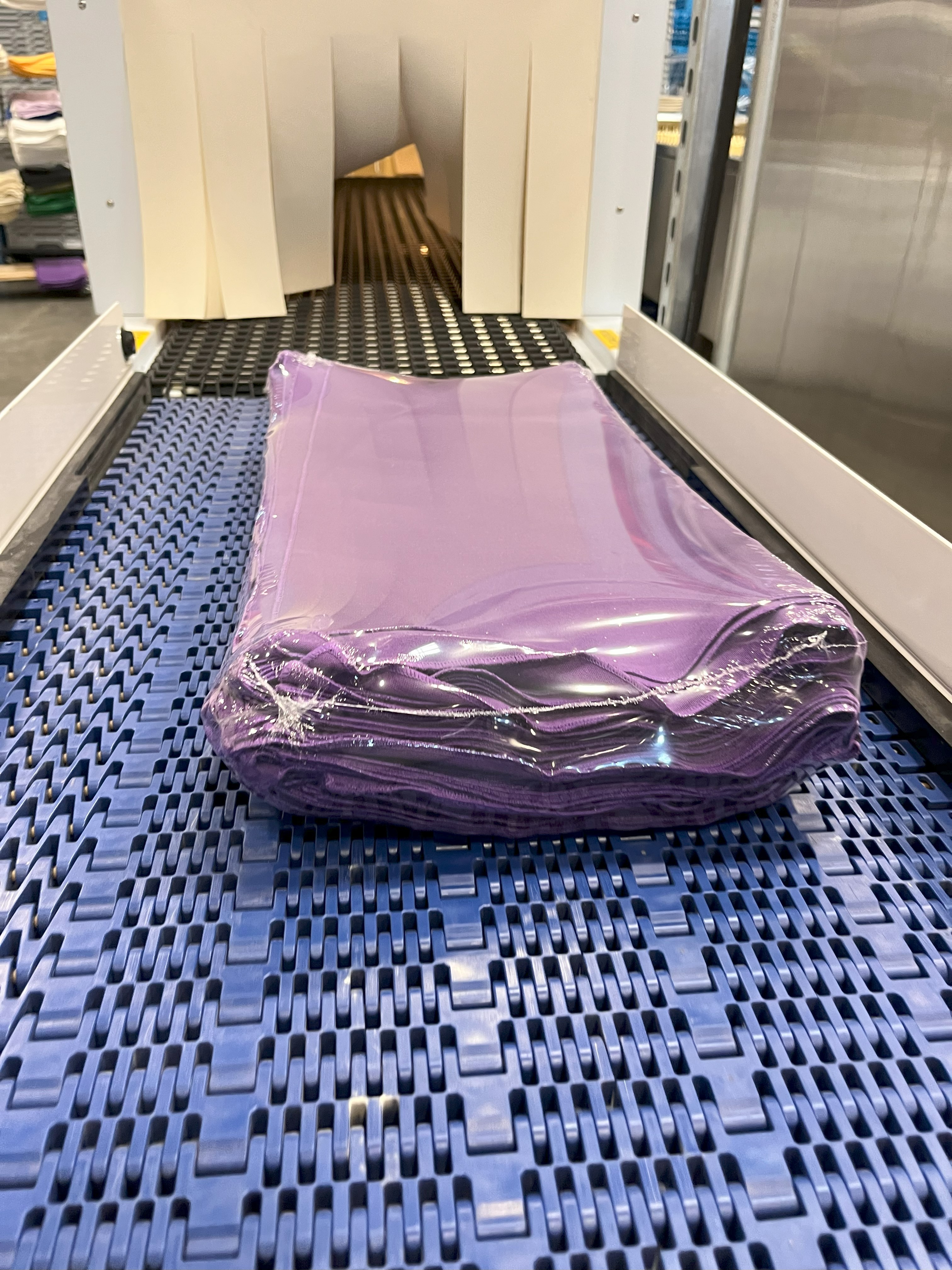
Our custom-designed laundry shrink wrapping equipment ensures that every bundle is wrapped cleanly, securely, and attractively to maintain sanitation standards and enhance presentation for your customers.
We know what it takes to be the partner you need to help you enhance your laundry facilities.
- We offer shrink films formulated exclusively for the laundry industry to deliver superior protection during storage, transport, and conveyance.
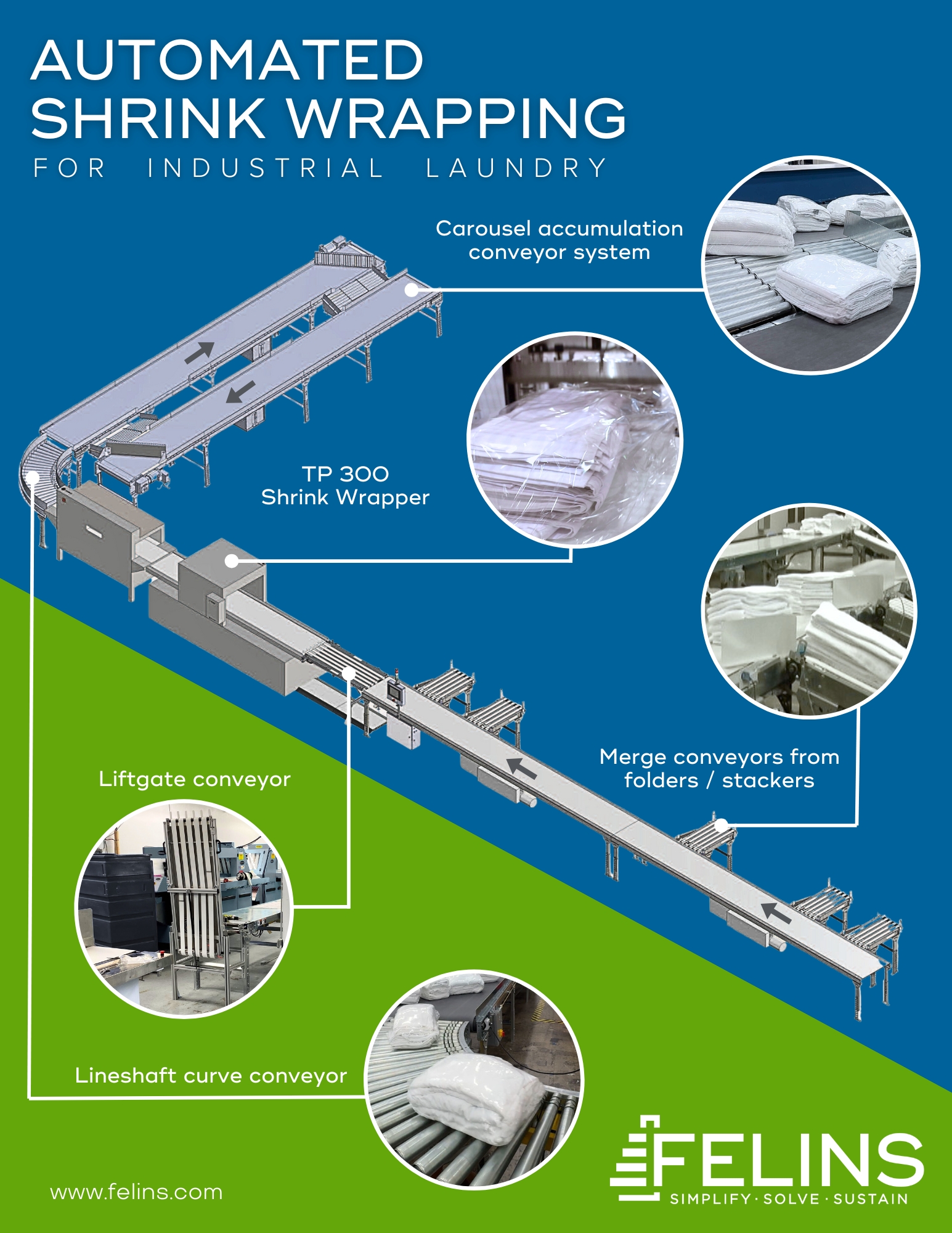
- Our solutions also include fully integrated conveyance systems that automate bundle handling directly from folders and ironers, preventing backups, collisions, and floor contact to protect your products and keep your operation running efficiently.
- Additionally, our team of trained service engineers provides installation, training, technical support, and preventative maintenance to ensure your shrink wrapping line operates at peak performance every day.
With Felins, you’re not just getting a shrink wrap machine – you’re partnering with the leading provider of complete, purpose-built laundry wrapping solutions.
BENEFITS OF SHRINK WRAPPING EQUIPMENT
Presentation, cleanliness and quality matters when it comes to setting your business apart from your competitors.
Shrink wrapping is a tried and true packaging method for superior results!
Our specialized industrial shrink film solutions are engineered for applications where product protection cannot be compromised.
- Complete Protection – Create a complete shrink film barrier against environmental contaminants
- Bundle Integrity – Maintain shape and fold quality during transportation and storage
- Labor Reduction – Automated systems significantly reduce manual handling requirements and increase packaging consistency
- Energy Efficiency – Modern systems use less energy than traditional packaging methods
- Complete Packaging Solutions – Our machines are matched with shrink films that are designed for specific applications and industries (we specialize in industrial laundry solutions)
Additional automated shrink wrap machine benefits include:
From semi-automatic to fully customized automated systems, our shrink wrapping equipment is engineered to support your sustainability and efficiency goals.
- Transparent film showcases products
- No changeover required for varying product sizes
- High-speed, continuous motion
- Options for little-to-no operator assistance required
- Can be stand-alone or combined with heat tunnels
- Results in easy-to-handle, attractive bundles
Compare Shrink Wrapping Equipment
Semi-Automatic Wrapping Systems
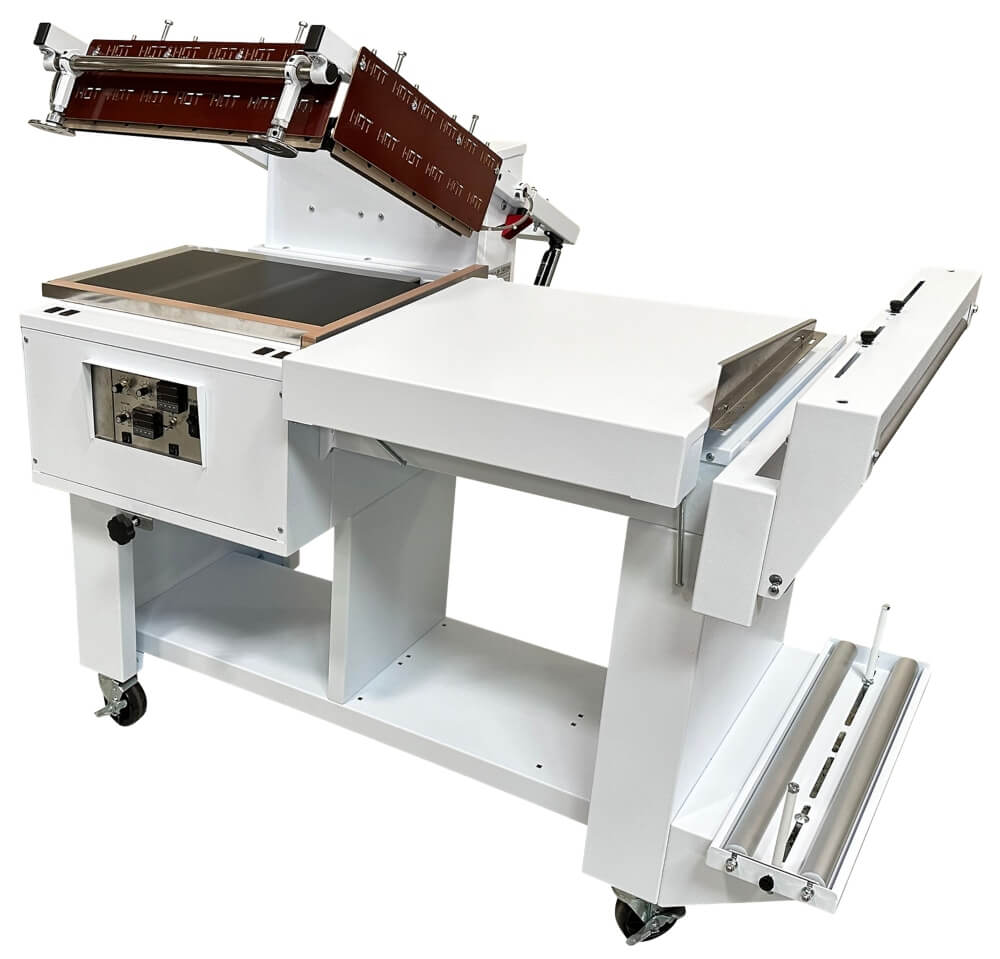
Perfect for facilities transitioning from manual wrapping, our SAT series semi-automatic shrink wrapping systems have small footprints for facilities with limited floor space or experiencing new increased growth in production volume.
Entry-level automation
- Compact design: 32" W x 39" H x 70" L
- Semi-Automatic
- 2x the speed of manual wrapping
- Simple operation requires minimal training
- Consistent sealing creates professional-looking packages
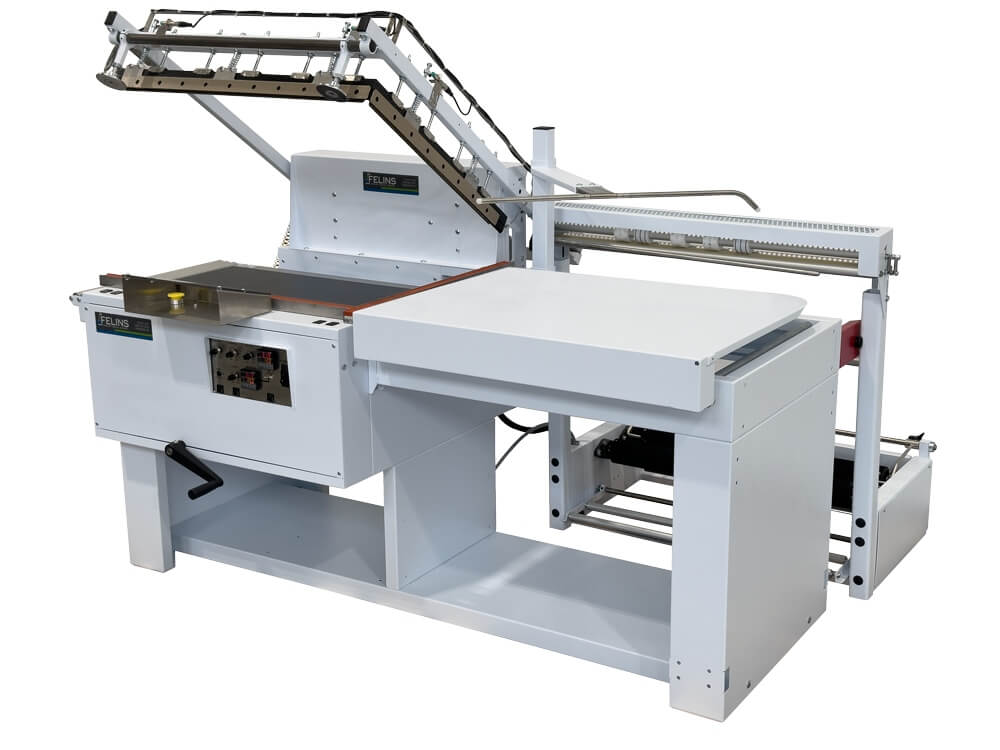
Entry-level automation
- Semi-automatic
- 47”W x 55”H x 85”L
- 3x the speed of manual wrapping
- Enhanced safety features
- Specialized design for textile and laundry applications
- Easily accommodates large bundles
Fully Automatic Wrapping Systems
The most robust shrink wrapping systems on the planet, our fully-automated solutions can help you optimize your operations to the fullest extent.

Single-piece packaging automation
- 39" W x 62" H x 70" L
- Fully automated
- 3.75x the speed of manual wrapping
- Seamless integration with existing production lines
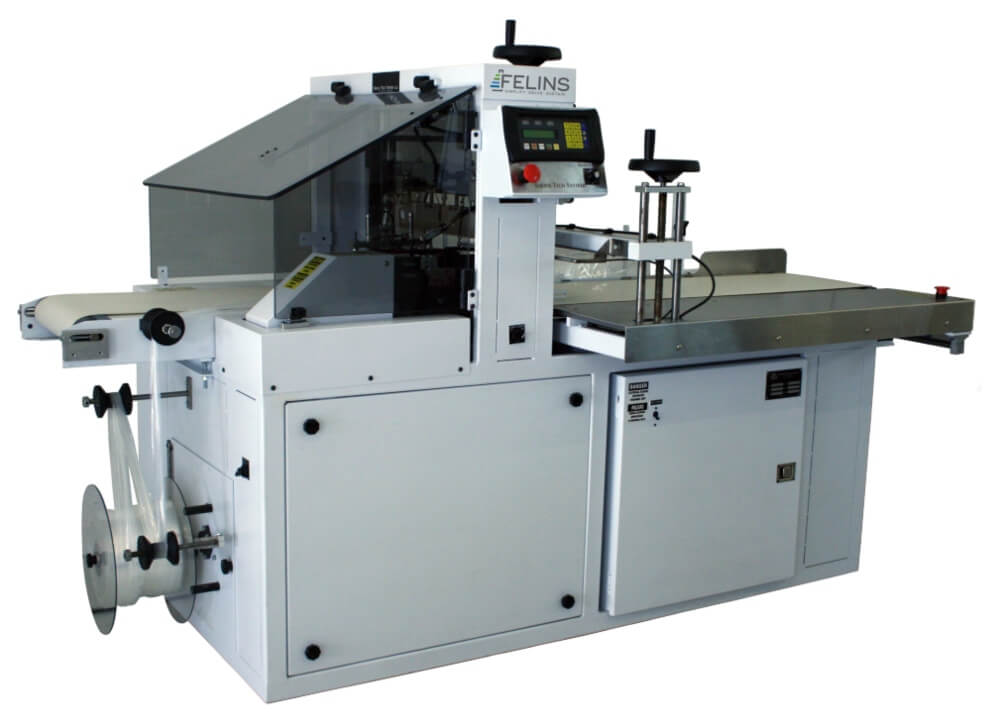
Small-bundle packaging automation
- 43" W x 56" H x 91" L
- Fully automated
- 2-3x the speed of manual wrapping
- User-friendly controls simplify operation
- Durable construction provides years of reliable service
- Specialized design for laundry or food packaging

High-volume packaging automation
- Fully automated
- 3-5x the speed of manual wrapping
- Advanced control systems optimize performance
- Seamless integration with upstream and downstream processes
- Custom configurations available for specific applications
Ask about a demo!
See how Felins can transform your operation.
The right shrink wrapping solution can dramatically improve your operational efficiency, product protection, and sustainability profile. At Felins, we’re committed to finding the perfect system for your unique needs. We offer sample testing, live and virtual demos.
Ready for Smarter
Shrink Wrapping Solutions? Let’s Talk.
Fill out the form below, and our team will be in touch within 1 business day.
The Complete Guide to Industrial Shrink Wrapping Solutions
What Is Shrink Wrapping?
Since the 1950s, shrink wrapping has revolutionized how products are packaged, bundled, and protected. What began as a simple packaging innovation has evolved into a sophisticated, highly efficient technology that generates over $20 billion annually in the global packaging industry. At the forefront of this evolution stands Felins, with our century-long heritage of packaging expertise and unwavering commitment to sustainable packaging solutions.
As industrial shrink film technology continues to advance, forward-thinking companies across healthcare, hospitality, and industrial laundry sectors are discovering the remarkable benefits of modern shrink wrap equipment. From preserving the cleanliness of freshly laundered textiles to optimizing warehouse space and reducing labor costs, today’s automated shrink wrap systems offer unprecedented efficiency and product protection.
At Felins, we’ve dedicated ourselves to perfecting industrial shrink wrapping machines that meet the unique challenges of various industries while maintaining our core commitment to sustainability. Our specialized knowledge in laundry packaging systems has positioned us as the trusted partner for businesses seeking to enhance their packaging operations while reducing environmental impact.
This comprehensive guide explores everything you need to know about industrial shrink film technology, applications, equipment, and implementation strategies — with particular focus on our expertise in creating custom solutions for businesses that demand the highest standards in packaging efficiency and presentation.
What is Shrink Film?
Definition and Working Principle
Let’s start with the basics.
Shrink film represents a revolutionary packaging technology that utilizes polymer films designed to contract when exposed to heat. This unique property allows the material to conform tightly around products of virtually any shape or size, creating a secure, protective package that enhances product presentation while providing excellent barrier properties.
The science behind shrink wrapping involves polymer chains that are stretched during manufacturing and frozen in this state. When heat is applied—typically through specialized shrink tunnels—these polymer chains relax to their original state, causing the film to contract uniformly around the product. This thermodynamic process creates tension that results in a tight, secure package.
Heat application methods vary based on application requirements and production volume. Industrial shrink wrap equipment typically employs convection heat tunnels that circulate hot air around the product, ensuring even shrinking across all surfaces. For specialized applications, other methods include radiant heat (infrared), direct contact heat sealing, or steam chambers—each offering distinct advantages for specific products or production environments.
Types of Shrink Films
The shrink film packaging industry offers several specialized materials engineered for specific applications:
Polyvinyl Chloride (PVC) provides excellent clarity and stiffness, making it ideal for retail product display. Its high shrink ratio allows for tight conformance around irregularly shaped items, while offering moderate barrier properties and good printability. Common applications include retail packaging, software, and consumer electronics.
Polyolefin shrink film has become the industry standard for many applications due to its versatility and environmental advantages. This material offers superior clarity, strength, and a wider sealing temperature range compared to PVC. Polyolefin film is particularly valued in food packaging and industrial applications where product protection is paramount.
Polyethylene (PE) films provide exceptional strength and durability, making them ideal for bundling heavy items or protecting products during shipping.
Sustainable packaging solutions continue to drive innovation in the industry, with new biodegradable and compostable shrink films entering the market. These eco-friendly packaging solutions offer comparable performance while significantly reducing environmental impact—aligning with Felins’ commitment to sustainable industrial packaging.
Specialty films with enhanced properties include UV-resistant formulations for outdoor storage, antistatic versions for electronic components, and films with varying oxygen and moisture barrier properties for sensitive products.
Key Properties and Selection Criteria
Selecting the right industrial shrink film for your specific application requires careful consideration of several critical properties:
- Shrink Film Tackiness is a crucial yet often overlooked property, particularly in industrial laundry applications. The right degree of surface tackiness ensures bundles stack securely without slipping during transport or storage, preventing toppling that could compromise product cleanliness or organization. Tackiness is also helpful in delivery operations allowing delivery drivers to carry more bundles when they are not slippery.
- Film gauge (thickness) directly impacts strength, durability, and appearance. Thicker films offer greater puncture resistance and durability but require more heat for proper shrinking. Thinner gauges reduce material costs and energy consumption during the shrinking process but may sacrifice some protective qualities.
- Shrink ratio indicates how much the film will contract when heated. Materials with higher shrink ratios conform better to irregular shapes but may cause distortion with delicate items. Healthcare linen packaging often requires specific shrink ratios to create properly compressed yet accessible bundles.
- Clarity and transparency are essential for retail applications where product visibility drives purchasing decisions. Even in industrial applications like healthcare laundry packaging, clarity allows for easy identification of contents without opening packages.
- Tear resistance and tensile strength determine how well the package will withstand handling during transportation and storage. These properties are particularly important for heavier items or in automated handling environments.
- Sealing properties affect production efficiency and package integrity. Films with wider sealing temperature ranges simplify production while ensuring consistent quality. Poor sealing leads to package failures and potential contamination—a critical concern in clean room linen packaging.
- Barrier properties protect against moisture, oxygen, dust, and other contaminants. For hospitality linen bundling, selecting film with appropriate barrier properties ensures textiles remain fresh and clean from laundry facility to end use.
- Printability allows for branding, product information, and handling instructions directly on the package. While less common in certain industrial and institutional laundry applications, printed shrink film can enhance brand recognition in hospitality settings and improve process compliance in healthcare environments.
Comparison with Alternative Packaging Methods
Understanding how shrink film compares to alternative packaging methods helps in making informed decisions about the most appropriate solution for specific applications:
Shrink Wrapping vs. Stretch Wrapping:
Often mistakenly referenced interchangeably, shrink wrapping and stretch wrapping are very different. While both utilize polymer films, stretch wrapping relies on the film’s elasticity rather than heat activation. Shrink film provides tighter conformity to irregular shapes and better clarity but requires heat application. Stretch wrapping equipment typically costs less but doesn’t work well for industrial laundry applications.
Shrink Film vs. Cardboard Boxing:
Traditional cardboard packaging offers excellent protection but requires significantly more storage space and material. Shrink wrap systems reduce material usage by (approximately) up to 60%, minimize storage requirements, and provide superior visibility. For applications like party rental equipment packaging, shrink film offers better protection against moisture and dust.
Banding vs. Shrink Wrapping:
Banding applies a single band around products, offering minimal material usage and cost. However, shrink wrapping provides complete encapsulation, superior protection against contamination, and better bundle integrity—crucial for healthcare compliant linen packaging. Banding is excellent for certain applications (and both can be classified as ‘minimal waste packaging systems’) — but sustainable packaging is not a one-size-fits all approach.
Vacuum Packaging vs. Shrink Film:
Vacuum packaging removes air before sealing, providing excellent protection against oxidation and moisture. However, it’s slower than shrink wrapping and not suitable for delicate items that might be crushed. Shrink wrapping offers faster throughput for high-volume laundry operations.
Flexible Pouches vs. Shrink Film:
Pre-made pouches offer convenience and strong seals but limited size options and higher per-unit costs. Shrink film can be cut to size, reducing waste and inventory complexity while accommodating variable product dimensions—ideal for industrial laundry conveyor systems handling diverse textile bundles.
Applications of Shrink Film Across Industries
Consumer Products Packaging
The retail sector has embraced shrink film packaging for its exceptional product presentation and protection capabilities. Clear polyolefin shrink film showcases products while deterring theft and tampering. Common applications include:
- Board games and toys benefit from the tamper-evident properties and display clarity
- Media products like DVDs, CDs, and books gain protection from handling while maintaining visibility
- Multi-packs of beverages, personal care items, and household products use shrink film to create convenient unit packages
- Electronic devices receive dust and scratch protection while allowing consumers to view product details
The combination of product visibility, protection, and tamper evidence makes shrink film an ideal solution for retail applications where presentation directly impacts consumer purchasing decisions.
Food Industry Applications
Food safety and preservation requirements have made shrink film an essential packaging solution across various food categories:
- Fresh produce benefits from breathable films that allow appropriate gas exchange while protecting against contamination
- Meat products require high-barrier films with excellent sealing properties to extend shelf life
- Frozen foods need films that maintain flexibility and integrity at low temperatures
- Bakery products utilize anti-fog films that preserve freshness while showcasing appearance
Food-grade shrink films must meet stringent regulatory requirements while providing the barrier properties necessary to maintain product freshness and safety throughout the distribution chain.
Industrial Laundry: Felins’ Core Expertise
The industrial laundry sector presents unique packaging challenges that Felins has specialized in addressing for decades. Our automated shrink wrap systems for industrial laundry deliver exceptional results in:
Laundered Textile Challenges:
After cleaning and folding, textiles must remain pristine until use. High-speed shrink wrap equipment creates a complete barrier against environmental contaminants while maintaining bundle integrity. Our industrial laundry equipment integrates seamlessly with existing production lines to maximize efficiency.
Cleanliness Preservation:
The primary purpose of laundry packaging systems is maintaining the hygienic condition of processed textiles. Our shrink film solutions prevent dust, moisture, and other contaminants from compromising freshly laundered items—crucial for healthcare linen packaging compliance.
Bundle Integrity:
Properly wrapped textile bundles maintain their shape and fold quality during transportation and storage. Energy efficient packaging equipment and shrink wrap systems apply just the right tension to secure items without crushing or wrinkling, ensuring customers receive products in perfect condition.
Automation Integration:
Felins’ expertise extends beyond stand-alone machines to complete industrial laundry conveyor systems with intelligent traffic control. Our solutions integrate seamlessly with folding equipment, sortation systems, and downstream handling processes for maximum throughput with minimal labor.
Process Flow Optimization:
By analyzing the entire production process, Felins designs shrink wrapping solutions that eliminate bottlenecks and optimize workflow. From accumulation conveyors to custom merge systems, our expertise ensures maximum operational efficiency while maintaining package quality.
Healthcare Industry Specifics
The healthcare sector demands exceptionally high standards for linen packaging, with requirements that go beyond conventional industrial applications:
Hospital Linen Management:
Healthcare facilities require absolute certainty in the cleanliness and organization of textile supplies. Hospital linen packaging equipment must deliver consistent results while accommodating various bundle sizes from small patient gowns to large bedding packs.
Regulatory Compliance:
Healthcare compliant linen packaging must meet strict standards for infection control and cross-contamination prevention. Felins’ systems are designed with these requirements in mind, creating packages that maintain sterility until the point of use.
Staff Safety:
Healthcare facilities often prioritize ergonomic packaging solutions and considerations for worker safety. Felins’ automated shrink wrap optimization for industrial laundry reduces manual handling, minimizing repetitive strain injuries and improving staff wellbeing.
Patient Satisfaction:
The presentation quality of linens contributes to overall patient experience and perception of care quality. Consistently wrapped, clearly identified linen packages project professionalism and attention to detail throughout the healthcare environment.
Hospitality Industry Applications
Hotels, resorts, and restaurants face unique challenges in linen management that our hospitality linen bundling solutions specifically address:
Hotel Linen Programs:
High-volume properties require efficient linen processing with perfect presentation. Shrink wrapped bundles arrive at housekeeping departments ready for immediate use, with clear identification and protection against environmental contaminants.
Cruise/Resort Requirements:
These specialized hospitality environments often operate with limited storage space and strict quality standards. Compact, clearly identified linen bundles maximize storage efficiency while ensuring guest satisfaction.
Space Optimization:
Properly shrink-wrapped textile bundles stack securely and efficiently, maximizing storage capacity in limited linen closets and housekeeping carts. This spatial efficiency is a critical advantage in hospitality environments where every square foot carries significant cost.
Labor Efficiency:
By delivering consistently wrapped, easily identifiable linen bundles, shrink wrapping reduces the time housekeeping staff spend managing inventory and preparing rooms. This labor reduction packaging approach translates directly to operational cost savings.
Party Rental Business Solutions
The unique needs of rental businesses make shrink wrapping particularly valuable for inventory management and protection:
Equipment Protection:
Rental items must be stored between uses while maintaining pristine condition. Shrink film provides excellent protection against dust, moisture, and handling damage without adding significant weight or bulk.
Inventory Management:
Clear shrink film allows for visual inventory checks without unwrapping items. This transparency simplifies stock management and reduces unnecessary handling.
Customer Impression:
Receiving cleanly packaged rental items enhances customer perception of quality and cleanliness. Professional shrink wrap presentation differentiates premium rental businesses from competitors.
Airline Industry Applications
Airlines operate under strict weight and space constraints while maintaining high presentation standards:
Blanket/Pillow Packaging:
In-flight comfort items require hygienic packaging that projects cleanliness while allowing for easy passenger access. Custom shrink film and bagging solutions for textile bundles ensure these items remain pristine until use.
Branding Opportunities:
Airlines increasingly use every customer touchpoint for brand reinforcement. Printed shrink films can incorporate airline branding, enhancing the passenger experience even with utilitarian items.
High-Volume Operations:
Major airlines process thousands of comfort items daily, requiring exceptional throughput from packaging systems. Our high-speed shrink wrap for industrial laundry meets these demanding requirements while maintaining consistent quality.
Felins' Shrink Wrapping Equipment and Solutions
Advanced Conveyance Systems
The efficiency of any shrink wrapping operation depends heavily on the material handling systems that move products through the process:
Pre-shrink Accumulation:
Optimizing throughput requires balancing production flow, especially when upstream processes operate at different speeds than the shrink system. Felins’ traffic control and smart conveyors buffer production, ensuring continuous operation even with variable input rates.
Intelligent Traffic Control:
Our laundry traffic control systems use sensors and programmable logic to route products efficiently, automatically diverting packages based on size, type, or destination. This intelligent routing maximizes throughput while preventing rework due to bundles bumping into each other. .
Merge Systems:
When multiple production lines feed a single shrink system, sophisticated merge controls ensure smooth integration without collisions or jams. These systems maximize equipment utilization while maintaining proper spacing for optimal shrink quality.
Post-shrink Handling:
After shrinking, packages require cooling and often additional handling such as labeling, sorting, or preparation for delivery. Our integrated conveyance solutions address the entire process flow, not just the wrapping stage.
Space-Efficient Layouts:
Facility space constraints often present significant challenges in system design. Felins’ engineering team specializes in creating compact, efficient layouts that maximize productivity within available space—a critical consideration for operations with limited floor area. At Felins, space-saving packaging methods go hand-in-hand with our commitment to sustainability.
Automation and Controls
Modern shrink wrap conveyor systems leverage sophisticated control technologies to maximize performance and reliability:
PLC Systems:
Programmable Logic Controllers form the backbone of our automation systems, enabling precise coordination between multiple components while providing flexibility for future modifications.
User Interfaces:
Intuitive HMI (Human-Machine Interface) designs simplify operation and troubleshooting. Our systems feature touchscreen controls with graphic representations of the process for easy monitoring and adjustment.
Preset Management:
For facilities that process multiple product types, our control systems can store specific settings for each variation. Operators simply select the appropriate Presets when changing products, eliminating time-consuming manual adjustments.
Customization Options
Felins recognizes that every operation has unique requirements. Our shrink film solutions for textile bundles can be tailored to specific needs:
Film Feeding Systems:
Depending on production volume and available space, we offer various shrink film feeding systems and delivery mechanisms from simple manual systems to fully automated multi-roll configurations with automatic splicing for zero-downtime operation.
Product Handling Adaptations:
Custom conveyor designs accommodate specific product shapes, sizes, and weights. From delicate linens to heavy industrial bundles, our systems can be engineered to handle your unique requirements.
Speed Adjustments:
Production rates vary widely between applications. Our systems can be configured for speeds ranging from a few packages per minute in small operations to hundreds per hour in high-volume industrial environments.
Benefits of Modern Shrink Wrapping Solutions
Operational Efficiency
Implementing advanced shrink wrapping technology delivers measurable improvements in operational performance:
- Labor Reduction: Automated shrink wrap systems dramatically reduce labor requirements compared to manual packaging methods. Typical installations show anywhere from 50-80% reduction in direct labor needs, freeing staff for higher-value activities while increasing overall productivity.
- Throughput Optimization and Improvements: Modern high-speed systems can process hundreds of packages per hour with consistent quality. This increased capacity often eliminates production bottlenecks, allowing upstream processes to operate at optimal efficiency.
- Floor Space Utilization: Compact, integrated systems minimize floor space requirements while maximizing productivity per square foot. For facilities with space constraints, this efficiency can eliminate the need for facility expansion while increasing output.
- Material Waste Reduction: Precise film control and consistent processing minimize waste compared to manual methods. Automated systems typically reduce film consumption by 15-30% through optimized film width selection and tension control.
Product Protection Enhancement
Beyond operational benefits, modern shrink wrapping significantly improves product protection:
- Barrier Properties: Complete encapsulation protects products from dust, moisture, and handling damage. For healthcare linen packaging, this barrier maintains cleanliness from processing through final use
- Transit Damage Reduction: Properly shrink-wrapped bundles resist shifting and compression during transportation. This stability reduces product damage and associated costs, including the significant expense of rewashing soiled or contaminated textiles.
- Shelf Life Extension: For many products, particularly in food and medical applications, the barrier properties of shrink film extend usable life by protecting against environmental factors that accelerate deterioration.
- Tamper Evidence: The tight conformity of shrink film makes unauthorized access immediately apparent. This security feature is particularly valuable for pharmaceutical products and high-value consumer goods.
- Environmental Protection: Beyond physical damage, shrink film shields products from UV exposure, humidity fluctuations, and airborne contaminants that can compromise quality and appearance.
Cost Analysis and ROI
Investment in advanced shrink wrapping technology delivers compelling financial returns. Here’s a brief look at the potential ROI packaging investment of sustainable shrink film machines:
- Initial Investment Considerations: While quality shrink systems can represent a significant capital investment, the comprehensive analysis must consider the total value of operational improvements, reduced labor costs, reduced packaging waste, and decreased product damage.
- Operating Costs: Modern systems minimize ongoing expenses through reduced labor requirements, decreased material consumption, and lower energy usage. These operational savings typically represent the largest component of ROI calculations.
- Payback Period Calculations: Depending on production volume and current packaging methods, most Felins customers experience payback periods of 12-24 months on their shrink system investments. High-volume operations often see returns in less than a year.
- Hidden Cost Reductions: Beyond obvious savings, automated shrink wrapping reduces costs associated with product damage, customer returns, workplace injuries, and storage space requirements—factors often overlooked in basic ROI calculations.
- Financing Options: To facilitate technology adoption, Felins offers various acquisition models including traditional purchase, financing option and leasing arrangements.
Sustainability Advantages
Environmental responsibility in packaging is increasingly important across all industries, and modern shrink wrapping offers significant sustainability benefits:
- Material Reduction Capabilities: Advanced systems minimize film thickness while maintaining package integrity, typically reducing material usage by 20-40% compared to older methods or alternative packaging approaches.
- Energy Efficiency Improvements: New generation equipment incorporates numerous energy-saving features including improved insulation, heat recovery systems, and intelligent power management that significantly reduces carbon footprint compared to legacy systems.
- Recyclability Options: Many modern shrink films are fully recyclable through established programs. Polyolefin films in particular can be processed through standard plastic recycling streams, supporting circular economy initiatives.
- Biodegradable Alternatives: The industry continues to develop sustainable shrink film for the hospitality industry and other applications that offer enhanced environmental performance while maintaining necessary protective properties.
- Elimination of Rework: By maintaining textile cleanliness through the distribution chain, shrink wrapping prevents the need for rewashing—a process that consumes significant water, energy, and chemical resources. This “hidden” sustainability benefit can represent substantial environmental impact reduction.
Implementation Strategies
Assessment and Planning
Successful implementation begins with thorough preparation and analysis:
- Needs Analysis: The first step involves detailed examination of current packaging processes, identifying pain points, bottlenecks, and opportunities for improvement. This analysis establishes baseline performance metrics against which new systems will be measured.
- Facility Evaluation: Physical constraints including available space, utility access, material flow patterns, and environmental conditions must be carefully assessed. Felins’ experts conduct comprehensive site surveys to identify potential challenges before equipment design begins.
- Process Mapping: Documenting the entire workflow from product preparation through final distribution reveals integration requirements and potential process improvements beyond the packaging operation itself. This holistic approach ensures that new systems enhance overall operational efficiency.
Installation and Integration
Careful execution during implementation minimizes disruption while maximizing results:
- Site Preparation: Prior to equipment arrival, facilities must prepare appropriate space with necessary utilities, environmental controls, and access routes. Felins provides detailed site requirements early in the process to allow for adequate preparation.
- Utility Requirements: Industrial shrink wrap equipment requires appropriate electrical power, and compressed air.. Our engineering team specifies exact requirements and works with facility managers to ensure availability.
- System Integration: Connecting new equipment with existing production systems requires careful coordination. Whether integrating with folding equipment, inventory management systems, or downstream handling, our implementation team ensures seamless communication between components.
- Testing Protocols: Before full production begins, comprehensive testing validates system performance across various product types and production scenarios. This methodical approach identifies and resolves potential issues before they impact operations.
- Staff Training Programs: Even the most advanced technology requires knowledgeable operators. Felins provides comprehensive training for operators, maintenance personnel, and supervisors to ensure everyone understands both basic operation and advanced optimization techniques.
Optimization Phase
Implementation isn’t complete when equipment is installed—continuous improvement maximizes return on investment:
- Fine-Tuning Procedures: Initial operation often reveals opportunities for further optimization. Our technical team works with operators to refine settings, adjusting film selection, temperature profiles, and conveyor speeds to achieve optimal results.
- Quality Control Implementation: Establishing appropriate quality checks and feedback mechanisms ensures consistent results and early identification of potential issues. We help develop quality standards and monitoring procedures specific to your operation.
- Performance Metrics: Defining and tracking key performance indicators provides objective measurement of system benefits and identifies areas for improvement. Typical metrics include throughput rates, material usage, quality rates, and overall equipment effectiveness.
- Continuous Improvement: The most successful implementations establish programs for ongoing optimization. Regular reviews of process performance, technological developments, and changing requirements ensure the system continues to deliver maximum value throughout its lifecycle.
- Maintenance Scheduling: Preventative maintenance is essential for system reliability and longevity. Felins provides detailed maintenance schedules and procedures, with options for planned service programs that minimize unexpected downtime.
Future Trends in Shrink Film Technology
Material Innovations
The packaging industry continues to evolve, with several key developments shaping future capabilities:
Bio-Based Polymers:
Shifting away from petroleum-based raw materials, new bio-derived polymers offer similar performance characteristics with reduced environmental impact. These innovative materials maintain mechanical properties while increasing renewable content.
Enhanced Recyclability:
New film formulations are specifically designed for improved recyclability, featuring compatible additives and simplified structures that process more efficiently through existing recycling streams.
Smart Films:
Emerging technologies incorporate sensors and indicators into shrink films, enabling monitoring of package integrity, temperature exposure, or product freshness. These intelligent packaging solutions enhance safety and reduce waste throughout the supply chain.
Antimicrobial Properties:
Particularly relevant for healthcare and food applications, films with inherent antimicrobial properties provide additional protection against contamination—a capability increasingly important in today’s hygiene-conscious environment.
Compostable Options:
For applications where recycling infrastructure is limited, newly developed compostable shrink films offer end-of-life advantages. These materials break down in commercial composting facilities, leaving no microplastic residue.
Equipment Advancements
Technological evolution continues to enhance equipment performance and capabilities:
Energy Efficiency Breakthroughs:
Next-generation shrink equipment achieves significant energy reductions through advanced insulation materials, precise heat control, and innovative energy recovery systems that capture and reuse thermal energy.
Compact Designs:
Engineering innovations continue to reduce equipment footprint while maintaining or increasing throughput capacity—a critical advantage for facilities with space constraints or those looking to expand production within existing buildings.
Choosing the Right Shrink Wrapping Solution
Assessment Framework
Finding the optimal solution requires systematic evaluation of several key factors:
- Product Analysis: Detailed examination of items to be packaged—their dimensions, weight, fragility, surface characteristics, and special requirements—forms the foundation of equipment selection. Different products may require specific film types, sealing methods, or handling techniques.
- Volume Calculations: Production volume and patterns directly impact equipment selection. Low-volume operations may benefit from semi-automatic systems with lower capital costs, while high-throughput environments justify fully automated solutions with greater initial investment.
- Facility Constraints: Available space, utility access, environmental conditions, and integration requirements all influence system design. Our engineering team works within these constraints to develop optimized solutions that maximize performance within real-world limitations.
- Growth Projections: Forward-looking analysis prevents costly undersizing or premature replacement. The most effective solutions accommodate anticipated growth through modular design, expandable capabilities, or configuration flexibility.
- Budget Considerations: Beyond purchase price, comprehensive financial analysis must consider operational savings, maintenance requirements, and expected service life. The lowest initial cost rarely delivers the best long-term value in industrial equipment.
Vendor Selection Criteria
Choosing the right partner is as important as selecting the right technology:
- Industry Experience: Vendors with specific expertise in your industry understand unique challenges and requirements. Felins’ century of packaging experience, with particular depth in industrial laundry, healthcare, and hospitality sectors, ensures solutions built on proven industry knowledge.
- Support Infrastructure: Even the best equipment requires occasional service and support. Evaluate potential partners’ technical capabilities, parts availability, response times, and ongoing support programs to ensure reliable operation throughout equipment life.
- References: Speaking with current users in similar applications provides valuable perspective on both equipment performance and vendor relationship. Felins proudly connects prospective customers with reference sites demonstrating successful implementations.
- Innovation Track Record: The packaging industry continues to evolve rapidly. Partners with demonstrated commitment to ongoing innovation help ensure your investment remains competitive as technologies and requirements change.
- Solution Completeness: Beyond equipment, comprehensive solutions include installation support, operator training, preventative maintenance programs, and ongoing optimization assistance. Evaluate potential partners on their ability to deliver the complete package, not just the machinery.
Felins’ Advantage Points
Several key factors distinguish Felins in the industrial packaging marketplace:
- Century of Experience: Since 1921, Felins has built unparalleled expertise in industrial packaging challenges. This deep knowledge base informs every aspect of our solutions, from initial design through ongoing support.
- Industrial Laundry Specialization: Unlike general packaging equipment providers, Felins has specifically focused on the unique requirements of industrial laundry, healthcare linen, and textile packaging. This specialized knowledge ensures solutions optimized for these demanding applications.
- Complete System Approach: Rather than supplying isolated components, Felins delivers integrated solutions addressing the entire process from product preparation through final packaging. This holistic approach ensures all elements work together seamlessly, maximizing efficiency and reliability.
- Startup Assistance and Training: Equipment capabilities mean little without proper implementation and operator knowledge. Felins provides comprehensive onsite training, detailed documentation, and hands-on support during critical startup phases to ensure your team achieves maximum benefit from day one.
- Ongoing Support Commitment: Our relationship continues long after installation. From preventative maintenance programs to process optimization consulting, Felins stands behind our solutions throughout their operational life, ensuring continued performance and adaptation to evolving requirements.
Maintenance and Optimization
Preventative Care Program
Like any sophisticated equipment, shrink wrapping systems require proper maintenance to deliver peak performance and longevity:
Daily Checklists:
Operators should perform basic inspections and cleaning procedures at the beginning of each shift. These simple routines identify potential issues before they impact production while maintaining optimal performance.
Scheduled Inspections:
More comprehensive examinations performed weekly or monthly focus on wear components, calibration verification, and preventive replacements. Documented inspection protocols ensure consistent attention to critical maintenance items.
Equipment Longevity Considerations:
With proper care, industrial shrink wrap equipment typically delivers 15-20 years of productive service. This exceptional lifespan significantly enhances return on investment compared to less durable alternatives requiring frequent replacement.
Wrapping It All Up
Industrial shrink wrapping has evolved from simple packaging technology to sophisticated automated systems that deliver significant operational advantages. As businesses face increasing pressure to maximize efficiency while minimizing environmental impact, advanced shrink wrap equipment offers compelling benefits across multiple industries.
For industrial laundry operations, healthcare facilities, hospitality providers, and many other sectors, properly implemented shrink wrapping solutions deliver measurable improvements in throughput, labor efficiency, and product protection. Felins’ century of packaging expertise, combined with our specialized knowledge of textile and linen applications, positions us as the trusted partner for organizations seeking optimal, sustainable packaging solutions.
Our commitment to sustainable packaging solutions aligns with growing environmental consciousness across all industries. From material reduction to energy efficiency, modern shrink wrapping technology contributes to corporate sustainability goals while delivering operational benefits.
The Felins approach emphasizes partnership rather than simple equipment sales. We work closely with each customer to understand specific challenges, develop customized solutions, and provide ongoing support throughout the system lifecycle. This collaborative approach ensures maximum value from your shrink wrapping investment.
As you consider your packaging challenges and opportunities, we invite you to explore how Felins’ specialized expertise in industrial shrink film technology can help your organization achieve its operational, financial, and sustainability objectives. Contact our team today to begin the conversation about transforming your packaging process.
FAQs
What is the difference between shrink film and stretch film?
Shrink film and stretch film operate on fundamentally different principles. Shrink film is manufactured in an expanded state and contracts when heat is applied, conforming tightly to the product. Stretch film relies on elastic properties to maintain tension around products without heat activation. While both create protective packaging, shrink film generally provides tighter conformity to irregular shapes and superior clarity, making it ideal for applications where presentation and complete protection are priorities. Stretch film typically requires less equipment investment but uses more material over time.
Which shrink film type is best for my specific application?
Film selection depends on several factors including product characteristics, protection requirements, presentation needs, and environmental considerations. For retail display applications requiring maximum clarity, polyolefin shrink film typically offers superior optical properties. Heavy industrial applications often benefit from polyethylene’s exceptional strength. Applications with environmental priorities might choose biodegradable or recyclable options. The optimal choice balances performance requirements with operational and sustainability considerations. Felins’ packaging experts can recommend specific films based on your unique application requirements.
How environmentally friendly is modern shrink film?
Today’s shrink films offer significantly improved environmental profiles compared to earlier generations. Advancements include reduced thickness (using less material while maintaining performance), improved recyclability, and development of bio-based and biodegradable alternatives. Many modern films are fully compatible with existing recycling streams, while others offer compostability in appropriate facilities. The environmental impact must be evaluated across the entire lifecycle, including material source, energy requirements, transportation efficiency, and end-of-life considerations. When properly selected and implemented, modern shrink film often represents a more sustainable choice than alternative packaging methods that use more material or combine multiple materials that complicate recycling.
Can shrink film be recycled through standard recycling programs?
Many modern shrink films are compatible with existing recycling infrastructure, particularly polyolefin and polyethylene variants. These materials typically carry recycling codes #2 (HDPE) or #4 (LDPE) and are accepted by many curbside and commercial recycling programs. PVC films (recycling code #3) face more limited recycling options. Recyclability depends on local facilities, film composition, and contamination levels. Clean, uncontaminated film generally offers the best recycling prospects. Some operations implement collection programs that consolidate film waste for specialized recycling channels. Felins can recommend specific film types that align with your local recycling capabilities and sustainability objectives.
What size shrink wrap machine do I need for my production volume?
Machine sizing depends primarily on production volume (packages per hour), product dimensions, and available space. Small operations processing fewer than 200 items daily might be well-served by compact, semi-automatic systems with manual feeding. Medium-volume operations typically require automated feed systems with production rates of 5-15 packages per minute. High-volume industrial applications often justify fully automated systems capable of processing 20+ packages per minute. Beyond raw throughput, considerations include available labor, shift patterns, peak production requirements, and anticipated growth. Felins offers equipment ranging from entry-level machines to high-speed industrial systems, allowing selection of the most appropriate solution for your specific requirements.
How much space is required for a complete shrink wrap system with conveyors?
Space requirements vary significantly based on system configuration, product size, and throughput requirements. Basic semi-automatic systems may require as little as 100 square feet, while comprehensive automated lines with accumulation, merging, and sorting capabilities can extend to several hundred square feet. Beyond the physical equipment footprint, considerations include operator workspace, maintenance access, material storage, and product staging areas. Our engineering team develops detailed layout plans that optimize available space while ensuring effective operation. For facilities with severe space constraints, Felins can design custom configurations that maximize productivity within available dimensions.
What utilities (electricity, air) are required for industrial shrink equipment?
Standard utility requirements include:
- Electrical: Most systems require 208-240V three-phase power, with connected loads ranging from 20-100 amps depending on system size and configuration. Specialized high-speed systems may require higher voltage or amperage.
- Compressed Air: Many systems require clean, dry compressed air at 80-100 PSI, with consumption rates of 1-5 CFM depending on system features and production rate.
Exact specifications depend on equipment selection and configuration. Felins provides detailed utility requirements during the proposal stage to ensure proper facility preparation before installation.
How fast can automated shrink systems package products?
Production speeds vary widely based on system configuration, product characteristics, and package requirements. Entry-level automated systems typically process 5-10 packages per minute, while mid-range equipment handles 10-20 packages per minute under optimal conditions. High-speed industrial systems can achieve rates exceeding 30 packages per minute for appropriate applications. Actual throughput depends on product handling requirements, bundle size, film properties, and downstream processes. Felins works with customers to establish realistic production expectations based on specific product and operational requirements, then designs systems to meet or exceed these targets.
What maintenance is required for shrink wrap equipment?
Effective maintenance programs typically include:
- Daily: Basic cleaning of product contact surfaces, sealing bar inspection, conveyor checks, and simple sensor verification.
- Weekly: More thorough cleaning, lubrication of specified points, tension adjustment verification, and film path inspection.
- Monthly: Comprehensive inspection of wear components, electrical connection verification, drive system examination, and performance parameter validation.
- Semi-Annual/Annual: Professional inspection of heating elements, control systems, drive components, and safety systems, typically performed by trained technicians.
Felins provides detailed maintenance documentation with all equipment, along with operator training that emphasizes proper care procedures. Optional maintenance service programs provide scheduled professional support to ensure optimal equipment performance and longevity.
How difficult is it to change film types or sizes on a shrink system?
Modern shrink systems are designed for relatively quick changeovers between different film types and sizes. Basic dimensional changes typically require 5-15 minutes for experienced operators and involve adjusting film width guides, centering mechanisms, and basic control parameters. Changing between significantly different film types (e.g., from polyolefin to polyethylene) may require additional adjustments to sealing temperatures, dwell times, and tunnel temperature profiles. Advanced systems often feature recipe storage capabilities that automatically adjust multiple parameters for specific product and film combinations, significantly reducing changeover time and ensuring consistent results. Felins provides comprehensive training on changeover procedures and can recommend optimal film inventory strategies to minimize changeover frequency.
What is the typical lifespan of professional shrink wrapping equipment?
With proper maintenance and care, industrial-grade shrink wrapping equipment typically delivers 15-20 years of productive service. Critical system components like heating elements, conveyor belts, and sealing bars represent normal wear items requiring periodic replacement, but the fundamental machine structure and control systems maintain functionality for extended periods. This exceptional longevity significantly enhances return on investment compared to less durable alternatives requiring frequent replacement. Many Felins systems installed decades ago continue to operate reliably with regular maintenance and occasional updates to control systems or key components. Our modular design approach often allows for partial upgrades that extend useful life while incorporating technological improvements.
Can shrink systems handle variable product sizes without manual adjustment?
Modern shrink wrapping systems offer varying degrees of flexibility for accommodating product size variations:
- Basic systems typically require manual adjustment for significant size changes, with setup times of 5-15 minutes depending on the extent of changes required.
- Mid-range equipment often features quick-adjustment mechanisms that reduce changeover time and may accommodate limited size variations without adjustment.
- Advanced systems incorporate sensors and automatic adjustment capabilities that detect product dimensions and modify machine settings accordingly, handling moderate size variations with minimal operator intervention.
- Fully adaptive systems utilize sophisticated control systems and servo drives to automatically adjust to significant size variations, ideal for operations with highly variable products or frequent changeovers.
Felins helps customers select the appropriate level of automation based on product variety, changeover frequency, labor availability, and budget considerations. Our engineering team can develop custom solutions for particularly challenging applications requiring exceptional flexibility.